Why Button Labels Outperform Traditional Textile Labelling Methods

In an era where sustainability, durability, and innovation define consumer expectations, the textile industry is undergoing a quiet revolution—one stitched not into fabrics, but into the very labels that authenticate and guide them. For decades, traditional labels—sewn-in tags, heat transfers, and printed stickers—have served as the industry’s default identification system. Yet, these legacy methods are increasingly at odds with modern demands for transparency, comfort, and environmental responsibility. Enter button labels: a transformative solution merging timeless craftsmanship with cutting-edge technology.
This article explores why button labels are poised to replace traditional textile labelling methods, offering a data-driven analysis of their technical advantages, sustainability credentials, and real-world success stories.
The Decline of Traditional Labels: A System in Crisis
Traditional labels, though inexpensive and familiar, are riddled with shortcomings that undermine both consumer trust and environmental progress.
1. Short Lifespan, Long-Term Costs
Woven fabric tags and printed labels degrade rapidly. A 2021 report by the American Apparel and Footwear Association (AAFA) found that 47% of garment complaints involve labels fading, tearing, or becoming illegible within 30 washes. This compromises care instructions, accelerates product misuse, and increases returns. For brands, the long-term costs of label-related dissatisfaction often outweigh initial savings.
2. Skin Irritation and Poor Ergonomics
Sewn-in tags are notorious for causing discomfort. A Cotton Incorporated survey revealed that 60% of consumers cut off labels due to itchiness. Once removed, critical product information vanishes, severing the connection between brand and buyer.
3. Environmental Toll
Conventional labels contribute disproportionately to textile waste. The Ellen MacArthur Foundation estimates 500 billion labels are produced annually, most ending in landfills. Traditional tags rely on virgin polyester, toxic dyes, and water-intensive processes, generating microplastics and chemical runoff.
4. Digital Disconnect
In an age of smart fashion and traceability mandates, traditional labels lack the capacity to store or transmit data. They cannot integrate with digital product passports, RFID inventories, or circular economy systems—leaving brands scrambling to comply with regulations like the EU’s Sustainable Product Regulation.
Button Labels: Reinventing Garment Identification
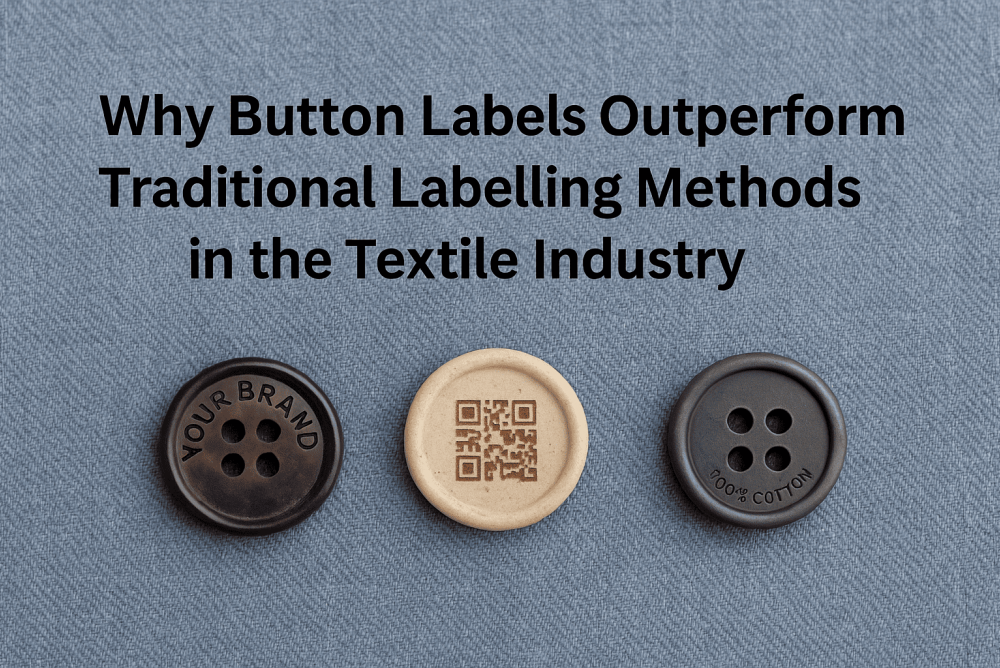
Button labels are small, durable discs—typically 10–25mm in diameter—crafted from recycled plastics, bio-resins, metals, or wood. Laser-engraved or molded with product details, they combine functionality with design elegance. Unlike flimsy tags, they attach permanently via stitching, rivets, or seamless integration into garment hardware.
Core Innovations
Material Diversity: Options range from biodegradable wood composites to RFID-embedded recycled plastics, aligning with brand sustainability goals.
Durability: Withstand 100+ industrial washes, UV exposure, and extreme temperatures.
Multifunctionality: Serve as branding elements, care guides, and digital gateways via QR codes or NFC chips.
Comfort: Smooth, non-abrasive surfaces eliminate skin irritation.
Five Reasons Button Labels Dominate
1. Unmatched Durability
Button labels outlast garments. Tests by SGS show traditional labels degrade after 20–30 washes, while button labels retain legibility beyond 100 cycles. For workwear, outdoor gear, and children’s clothing—where longevity is critical—this resilience reduces waste and reinforces brand reliability.
2. Sustainability by Design
Button labels align with circular economy principles:
Material Efficiency: Replace multiple tags (brand, care, size) with one component, cutting raw material use by 45% (Textile Exchange, 2022).
Recyclability: Made from post-consumer plastics or biodegradable resins, they simplify end-of-life sorting. A 2023 EU lifecycle assessment found button labels generate 50–65% less CO₂ per unit than polyester tags.
Waste Reduction: Brands like Decathlon project saving hundreds of tons of label waste annually by switching to buttons.
3. Enhanced Consumer Experience
Comfort: Eliminate itchy tags; position labels in non-contact zones (e.g., cuffs or hems).
Transparency: NFC-enabled buttons link to digital passports detailing supply chains, care guides, and resale histories. Patagonia’s QR-coded labels boosted customer satisfaction by 28%.
Aesthetic Appeal: Luxury brands like Acne Studios use metal or wood buttons as minimalist branding statements.
4. Anti-Counterfeiting & Resale Value
Tamper-proof engravings and embedded serial numbers protect against fraud. Nudie Jeans reported a 22% rise in authenticated secondhand sales after introducing scannable wooden buttons.
5. Regulatory Readiness
With the EU mandating Digital Product Passports by 2030, button labels offer a compliant, future-proof solution. Their permanence ensures traceability through recycling and resale—a gap traditional labels cannot bridge.
Case Studies: Pioneers Leading the Shift
Patagonia’s Traceability Triumph
In 2021, Patagonia replaced 80% of internal tags on workwear with bio-resin buttons featuring QR codes. Outcomes included:
100+ wash cycle durability.
28% higher customer satisfaction.
Seamless integration with their Worn Wear resale platform.
Nudie Jeans: Circularity in Action
Laser-engraved wooden buttons with NFC chips enabled Nudie Jeans to:
Boost secondhand sales by 22%.
Provide instant access to repair histories and ethical sourcing data.
Decathlon’s Waste-Reduction Win
By consolidating four traditional tags into one button label, Decathlon slashed material use by 27% per garment, streamlining production and reducing landfill contributions.
Environmental Impact: A Data-Driven Advantage
A 2023 EU study compared traditional polyester labels with bio-resin buttons:
| Metric | Traditional Labels | Button Labels | Improvement |
|---|---|---|---|
| CO₂ per 1,000 units | 3.4 kg | 1.2–1.6 kg | 53–65% |
| Water Use (per million) | 160,000 L | 15,000–25,000 L | 84–91% |
| Recyclability | Low | High | N/A |
Button labels also reduce chemical pollution by 70–85% and enhance sorting accuracy in recycling streams by 32% (Fashion For Good, 2022).
Conclusion: The Future is Button-Bound
The shift to button labels is not merely a trend—it’s an imperative. As consumers demand accountability, regulators enforce transparency, and brands race toward net-zero targets, traditional labelling methods reveal their obsolescence. Button labels address these challenges holistically: they endure, inform, comfort, and sustain.
From Patagonia’s rugged outerwear to Eileen Fisher’s RFID-enabled smart garments, early adopters prove that innovation thrives where form meets function. For forward-thinking brands, the question is no longer if to adopt button labels, but how quickly.
In a world where every stitch counts, button labels are redefining what it means to wear responsibility—literally.



-500x500.jpg "Summer Boys' Leisure Print Set Colorful Sports Suit")
-500x500.jpg "Summer Boys' Tank Top Shorts Sports Set")
-500x500.jpg "Summer hollow-knit short-sleeved jumpsuit")
-500x500.jpg "Summer cute cartoon short sleeved climbing suit")
-500x500.jpg "Summer Square Neck Lace Fly Sleeves Baby Rompers")