Sustainable Textile Manufacturing: Techniques, Innovations, and Trends
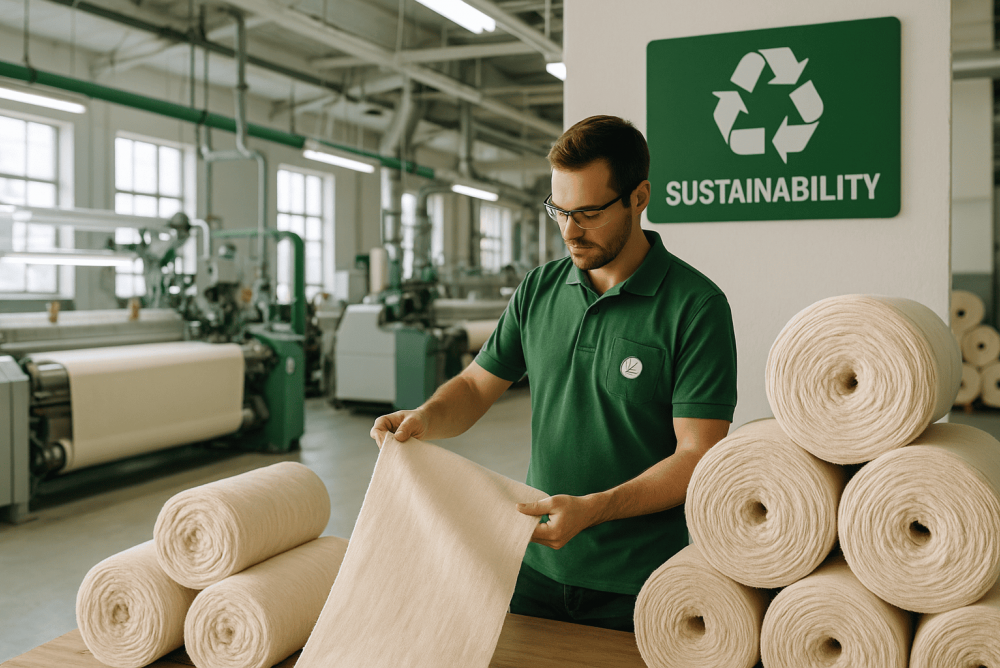
The textile industry stands as one of the largest contributors to global pollution. According to the United Nations Environment Programme (UNEP), the fashion industry produces 20% of global wastewater and 10% of global carbon emissions. These numbers surpass emissions from international flights and maritime shipping combined. Yet, despite the alarming statistics, the momentum toward sustainable manufacturing is gaining real strength.
Sustainable textile manufacturing focuses on two main pillars: reducing waste and minimizing energy consumption. These efforts are not just a trend but a pressing necessity driven by environmental urgency, regulatory changes, and evolving consumer expectations.
In the past, manufacturing processes relied heavily on water-intensive techniques, hazardous chemicals, and energy sourced from fossil fuels. The result was a supply chain that left a significant carbon footprint and generated massive waste. Today, industry leaders are reimagining textile production from the ground up, integrating new technologies, materials, and methods that promise a lighter environmental impact.
The urgency for change is clear. Global fiber production reached 113 million tonnes in 2021, and it’s projected to increase by 34% to 152 million tonnes by 2030 if current trends continue, according to Textile Exchange. Without fundamental shifts, the environmental cost will become unbearable.
Fortunately, innovation offers hope. From closed-loop systems that recycle water and chemicals to biotechnologies that create fabrics from agricultural waste, manufacturers are embracing groundbreaking solutions. Energy-efficient dyeing techniques, 3D knitting, and automation are just a few examples of how the industry is evolving.
This article will explore the real-world practices and technologies shaping the sustainable textile movement. We will dissect the environmental impact of conventional manufacturing, dive into waste-reduction and energy-saving techniques, and highlight companies pioneering meaningful change. You’ll find research-backed insights, examples from leading brands, and practical explanations of complex innovations.
If you’re a manufacturer, retailer, investor, or conscious consumer, understanding these shifts is crucial. Sustainability is not an option anymore; it’s the path forward.
The Environmental Impact of Traditional Textile Manufacturing
Traditional textile manufacturing has long been associated with significant environmental damage. From raw material extraction to final garment production, nearly every stage involves processes that strain natural resources and ecosystems.
One of the most alarming concerns is water usage. Producing just one cotton T-shirt requires approximately 2,700 liters of water — the equivalent of what one person drinks in two and a half years, according to the World Wildlife Fund (WWF). Cotton cultivation alone accounts for 24% of the world’s insecticide use and 11% of all pesticide use, creating runoff that pollutes rivers and harms biodiversity.
Beyond water, energy consumption poses another severe challenge. Textile production is energy-intensive, often relying on coal-powered plants. According to the Ellen MacArthur Foundation, the industry’s carbon footprint could reach 2.7 billion metric tons per year by 2030 if changes are not made. The majority of emissions come from raw material production, dyeing, and finishing processes.
Chemical usage adds another layer of complexity. Conventional dyeing processes involve over 8,000 synthetic chemicals. Many of these substances are toxic and poorly regulated in certain manufacturing regions. As a result, industrial wastewater laden with heavy metals and dyes often ends up in rivers, contaminating drinking water supplies and endangering aquatic life.
Waste generation is another critical issue. Approximately 92 million tonnes of textile waste are created annually worldwide. Alarmingly, less than 1% of material used to produce clothing is recycled into new clothing, based on research by the Circular Fibres Initiative. The rest often ends up in landfills or is incinerated, releasing greenhouse gases and other pollutants into the atmosphere.
Furthermore, microfiber pollution has emerged as a relatively recent concern. When synthetic garments like polyester are washed, they shed tiny plastic fibers. These microfibers flow into water systems, eventually reaching oceans where they harm marine life. Studies suggest that the textile industry contributes around 35% of microplastic pollution in the oceans, more than any other source.
Labor practices are intertwined with environmental impacts. Many factories are located in regions with lax environmental laws, which not only leads to higher pollution but also places workers in hazardous conditions. Dye workers, for instance, are often exposed to carcinogenic substances without proper protection.
The cumulative environmental cost of traditional textile manufacturing is staggering. It affects water systems, contributes to climate change, reduces soil fertility, harms wildlife, and endangers human health. Without systemic change, the industry risks exacerbating already critical global environmental crises.
Recognizing the gravity of these issues sets the stage for understanding why innovation and sustainable techniques are not merely beneficial but absolutely essential for the textile industry's future.
Techniques for Waste Reduction in Textile Production
Reducing waste in textile production is a multifaceted challenge. It requires interventions at every stage — from design to manufacturing to end-of-life management. Thankfully, various techniques are helping the industry shift toward a more sustainable model.
1. Zero-Waste Design
Zero-waste design is a forward-thinking approach that eliminates textile waste at the pattern-making stage. Traditional garment production wastes around 15% of the fabric, according to research from Timo Rissanen, a pioneer in this field. Zero-waste designers create patterns that fit together like a puzzle, ensuring that every inch of fabric is utilized.
Brands like Daniel Silverstein’s Zero Waste Daniel and initiatives within fashion houses such as Eileen Fisher have demonstrated that zero-waste clothing can be both fashionable and commercially viable.
2. Digital Fabric Cutting
Advanced digital cutting technologies reduce waste by improving cutting precision. Automated systems like Gerber Technology’s cutting solutions use sophisticated software to map the most efficient layouts for fabric cutting. This optimization leads to a reduction in offcuts and improves material yield by as much as 10–15%.
In addition, laser cutting reduces the need for manual intervention, minimizing human error and material wastage.
3. Recycling and Upcycling
Fabric recycling has gained traction as a major waste-reduction strategy. Mechanical recycling involves shredding old textiles into fibers, which can then be spun into new yarn. Chemical recycling, a newer method, breaks fibers down into their molecular components for re-polymerization, offering even higher quality outputs.
Companies like Renewcell have pioneered processes like fiber-to-fiber recycling, turning worn-out garments into a new raw material called "Circulose®." Similarly, brands such as Patagonia have long embraced garment recycling and upcycling, encouraging customers to repair, reuse, and return old products.
Upcycling, while more artisanal, transforms waste materials into products of higher value. Designers like Marine Serre creatively integrate deadstock fabrics into high-end fashion collections, breathing new life into discarded materials.
4. On-Demand Manufacturing
Traditional production often involves creating large inventories based on forecasts, leading to unsold goods and significant waste. On-demand manufacturing flips the model. Products are made only when an order is placed, drastically reducing excess inventory.
Brands like Ministry of Supply and Unmade have adopted this model. Their systems integrate 3D knitting machines and dynamic pattern software to produce garments with minimal waste.
5. Waterless and Eco-Friendly Dyeing Techniques
Traditional dyeing is a major source of textile waste and water pollution. New dyeing techniques, such as ColorZen (for cotton) and CO2 dyeing (using supercritical carbon dioxide), eliminate or drastically reduce the need for water and harsh chemicals.
For instance, DyeCoo, a Netherlands-based company, has developed a water-free dyeing process using recycled carbon dioxide. The method not only cuts water use by 100% but also reduces dye consumption by 50%.
These innovations not only reduce wastewater and chemical runoff but also minimize defective batches, leading to less product wastage overall.
6. Smart Inventory Management and AI Forecasting
AI-driven forecasting tools help brands predict demand with greater accuracy. Systems from companies like Lectra and True Fit analyze vast datasets to optimize production schedules and minimize overproduction. More accurate demand predictions mean fewer unsold garments, thereby reducing end-of-life waste.
Energy-Efficient Innovations in Textile Manufacturing
Energy consumption remains one of the most critical challenges in textile production. Traditional methods, from fiber processing to dyeing and finishing, consume vast amounts of electricity and fossil fuels. However, recent innovations are significantly improving energy efficiency across the supply chain.
1. Low-Temperature Dyeing Techniques
Conventional dyeing processes require water to be heated to 100°C or higher, consuming large amounts of energy. Low-temperature dyeing innovations now allow for coloration at significantly reduced temperatures.
For instance, Huntsman Textile Effects developed AVITERA® SE dyes, which enable dyeing at just 60°C. This reduction cuts energy usage by up to 50% and saves substantial amounts of water, helping mills meet strict environmental regulations while lowering operating costs.
2. Supercritical CO2 Dyeing
As mentioned earlier, DyeCoo's supercritical CO2 technology replaces water entirely with pressurized carbon dioxide. This method not only conserves water but slashes energy needs by eliminating the heating and drying stages associated with traditional dyeing.
Supercritical CO2 dyeing machines, while expensive initially, offer long-term savings and environmental benefits, making them an increasingly attractive investment for progressive manufacturers.
3. Renewable Energy Integration
Manufacturers are increasingly investing in renewable energy sources. Solar panels, biomass boilers, and wind turbines are now powering factories around the world.
For example, Arvind Limited, one of India’s largest textile companies, has committed to sourcing 40% of its energy from renewable sources by 2026. Their shift to solar energy already powers several manufacturing facilities, reducing dependence on coal and cutting carbon emissions.
4. Waste Heat Recovery Systems
Many textile factories now install heat recovery systems that capture and reuse energy from exhaust gases, steam, and wastewater. These systems reduce the need for additional fuel input.
The European Union’s SESEC (Sector Skills Strategy in Energy Efficiency Construction) project reported that heat recovery systems could improve factory energy efficiency by up to 20%. For dyeing and finishing plants, which often operate at high temperatures, this represents a substantial energy and cost saving.
5. Energy-Efficient Machinery and Automation
Modern spinning, weaving, and knitting machines are designed with energy conservation in mind. Brands like Saurer and Rieter have introduced spinning machines that consume up to 25% less energy compared to older models.
Automation also plays a major role. Robotic arms, AI-driven quality control, and smart scheduling systems streamline operations, minimize downtime, and optimize energy use across production lines.
For instance, Shima Seiki's WHOLEGARMENT® knitting machines not only reduce material waste but also drastically lower energy consumption by eliminating many intermediate processes like sewing and cutting.
6. Digital Printing Technologies
Traditional textile printing processes are energy-heavy due to pre- and post-treatment steps that involve heating and drying. Digital textile printing, however, uses less water, fewer chemicals, and significantly less energy.
According to a study by WTiN (World Textile Information Network), digital textile printing can reduce energy consumption by up to 60% compared to conventional rotary screen printing methods. Companies like Kornit Digital offer waterless, energy-efficient printing solutions tailored for large-scale production.
The Role of Circular Economy in Sustainable Textiles
The linear model of "take, make, dispose" has dominated the textile industry for decades. However, this approach is unsustainable. The circular economy offers a powerful alternative that redesigns the system to eliminate waste and regenerate resources.
At its core, a circular textile economy aims to keep materials in use for as long as possible. It prioritizes reusing, repairing, refurbishing, and recycling garments and fibers, thus drastically reducing the need for virgin resources.
1. Designing for Durability and Recycling
The first step toward a circular model begins at the design stage. Products must be made to last longer, with modular designs that allow easy repair or disassembly.
Patagonia’s "Worn Wear" program exemplifies this philosophy. By encouraging customers to repair rather than replace, they extend the life of their products and reduce environmental impact.
Designers are also increasingly adopting mono-material garments. These products use a single type of fiber, such as 100% polyester, which simplifies recycling at end-of-life compared to garments made from blended fabrics.
2. Fiber-to-Fiber Recycling
True circularity requires systems that can recycle old textiles into new high-quality fibers. Mechanical recycling is suitable for pure cotton and wool, but it can weaken fibers.
Emerging chemical recycling technologies offer a promising solution. Companies like Infinited Fiber Company in Finland use innovative processes to turn worn-out garments into new, virgin-quality fibers. Their process breaks down cellulose into a slurry and regenerates it into Infinna™, a fiber that looks and feels like cotton.
Similarly, companies like Worn Again Technologies are developing closed-loop systems capable of recycling blended fibers — a major breakthrough for mainstream adoption.
3. Rental, Resale, and Subscription Models
Business models are shifting to support circularity. Rental and resale platforms extend product life and reduce the need for new production.
ThredUp, one of the world’s largest online consignment and thrift stores, estimates that buying secondhand displaces the need for new clothing production by at least 25%. Subscription services like Rent the Runway and Nuuly enable consumers to access fashion without permanent ownership, normalizing shared consumption.
Luxury brands are also entering the secondhand market. Gucci partnered with The RealReal to promote authenticated pre-owned sales, recognizing that resale strengthens brand value while promoting sustainability.
4. Take-Back and Recycling Initiatives
Retailers and manufacturers are implementing take-back programs to reclaim old garments and recycle them responsibly.
H&M’s Garment Collecting Program allows customers to drop off unwanted clothing at stores. Since its launch in 2013, H&M reports it has collected more than 155,000 tonnes of textiles globally. Although critics highlight that this volume represents a small fraction of their total sales, such programs still raise awareness and pave the way for better recycling infrastructure.
5. Regenerating Resources
Circular economy models also focus on regenerating resources. For example, agricultural waste is being transformed into new fibers.
Piñatex® uses waste pineapple leaves to create a leather alternative, reducing agricultural waste and providing farmers with additional income streams. Similarly, Orange Fiber uses byproducts from the citrus juice industry to create sustainable silk-like textiles.
These innovations not only divert waste from landfills but also reduce reliance on virgin fibers like conventional cotton, which are resource-intensive to grow.
Emerging Technologies Shaping the Future of Sustainable Textiles
Innovation is reshaping textile manufacturing faster than ever before. New technologies are not just making production more efficient; they are redefining what is possible in terms of sustainability, waste reduction, and resource management.
1. Biofabricated Textiles
Biofabrication involves growing materials using living organisms like yeast, bacteria, or fungi. This process drastically reduces the need for land, water, and chemicals compared to traditional agriculture.
One leading example is MycoWorks, which uses mycelium (the root structure of mushrooms) to create Reishi™, a leather-like material. Unlike animal leather, Reishi™ can be produced with minimal environmental footprint and offers similar durability and feel.
Similarly, Bolt Threads produces Mylo™, another mycelium-based material adopted by brands like Adidas, Stella McCartney, and Lululemon. These products are biodegradable and could revolutionize how we think about fabric sourcing.
2. Smart Textiles
Smart textiles integrate electronic components into fabrics, allowing garments to adapt to environmental conditions or user needs.
For instance, researchers at the Massachusetts Institute of Technology (MIT) have developed fibers that can sense, store, and transmit data. In the future, smart clothing could monitor body temperature and adjust ventilation, reducing the need for layered clothing and therefore material consumption.
Moreover, smart fabrics can also help extend garment life. For example, self-healing textiles made from special polymers can repair minor damages, reducing the frequency of replacement.
3. 3D and 4D Printing
3D printing is already being used to produce customized textiles and accessories, eliminating traditional cut-and-sew waste.
Companies like Stratasys have collaborated with designers to create 3D-printed dresses that require no fabric at all. This method offers precision production and near-zero material wastage.
4D printing, an emerging evolution, uses materials that change shape in response to stimuli like heat or moisture. Imagine garments that adapt their form based on weather conditions — reducing the need for multiple types of clothing.
4. Waterless Textile Finishing
Textile finishing, which involves treatments like wrinkle-resistance or stain-proofing, typically consumes large amounts of water and chemicals.
Nanotechnology now allows for dry finishing methods. For instance, NanoSphere®, developed by Schoeller Textil AG, offers water-repellent and stain-resistant properties using minimal resources. Plasma treatments also modify fiber surfaces at the molecular level without using any liquids.
These methods not only conserve water but also reduce chemical runoff, contributing to cleaner manufacturing.
5. Blockchain for Supply Chain Transparency
Consumers increasingly demand to know where and how their clothes are made. Blockchain technology provides a transparent, tamper-proof record of a garment's journey from raw material to final product.
Companies like Provenance and TextileGenesis have developed platforms that track fibers through every stage of the supply chain. Fashion brands such as Stella McCartney are adopting blockchain to demonstrate their environmental and ethical credentials.
Greater transparency builds consumer trust and encourages brands to adopt more sustainable practices across the board.
Case Studies: Brands Leading the Way in Sustainable Textiles
Real-world examples show that sustainable textile manufacturing is more than an aspiration — it’s an achievable reality. Several brands are setting benchmarks by integrating innovation, ethical practices, and environmental responsibility into their business models.
1. Patagonia: A Pioneer in Environmental Responsibility
Patagonia has long been considered the gold standard in sustainable fashion. Founded in 1973, the company integrates environmental and social responsibility at every level of its operations.
Patagonia uses recycled polyester, organic cotton, and hemp to reduce its reliance on virgin materials. More importantly, they promote durability over disposability. Their "Worn Wear" program encourages customers to repair clothing, and they offer lifetime guarantees on many products.
Patagonia also allocates 1% of sales to environmental causes through its "1% for the Planet" initiative. In 2022, the company's founder, Yvon Chouinard, transferred ownership of Patagonia to a trust and nonprofit dedicated to fighting climate change — an unprecedented move in corporate history.
2. Stella McCartney: Luxury and Sustainability Combined
Stella McCartney has built an empire proving that luxury fashion can also be ethical and sustainable. She has refused to use leather, feathers, fur, or exotic skins since launching her brand in 2001.
The brand actively invests in material innovation, partnering with companies like Bolt Threads to develop Mylo™ mushroom leather. Stella McCartney also collaborates with the Ellen MacArthur Foundation to promote a circular fashion economy, championing recycled materials and product longevity.
In 2022, McCartney unveiled a sustainable fashion line that incorporated regenerative cotton and lab-grown materials, showing that cutting-edge science and high-end fashion can coexist beautifully.
3. Adidas: Scaling Sustainable Innovation
Adidas has taken bold steps to integrate sustainability across a massive, global operation. The company launched its "Parley for the Oceans" collection, using plastic waste recovered from coastal areas to produce high-performance shoes and apparel.
As of 2021, Adidas had produced over 30 million pairs of Parley shoes. The brand also announced that by 2024, it aims to eliminate virgin polyester in its products, switching entirely to recycled alternatives.
Additionally, Adidas' FUTURECRAFT.LOOP project introduced a fully recyclable running shoe, designed to be returned, ground down, and remade into a new pair, closing the material loop.
4. Eileen Fisher: Building a Circular Supply Chain
Eileen Fisher, an American designer known for minimalist, timeless clothing, has been a champion of slow fashion for decades.
Her "Renew" program takes back old Eileen Fisher garments from customers and either refurbishes them for resale or transforms them into new designs through creative remanufacturing. The brand also supports regenerative agriculture practices and invests in sustainable materials like organic cotton and TENCEL™.
In 2019, the company published a comprehensive Social Consciousness Report, providing transparent insights into their supply chain, labor conditions, and sustainability goals — setting an example for industry transparency.
5. Reformation: Data-Driven Sustainability
Reformation, a Los Angeles-based brand, takes a modern, data-driven approach to sustainability. Every garment on their website includes a "RefScale" that shows the environmental savings achieved compared to conventional manufacturing methods.
The company prioritizes eco-friendly materials such as TENCEL™, recycled fabrics, and deadstock textiles. Their production facilities are powered by renewable energy and certified by the Global Organic Textile Standard (GOTS) and Fair Trade USA.
Reformation also achieves carbon neutrality by purchasing verified carbon offsets, reinforcing their commitment to minimizing their environmental impact at every step.




-500x500.jpg "Summer Boys' Leisure Print Set Colorful Sports Suit")
-500x500.jpg "Summer Boys' Tank Top Shorts Sports Set")
-500x500.jpg "Summer hollow-knit short-sleeved jumpsuit")
-500x500.jpg "Summer cute cartoon short sleeved climbing suit")
-500x500.jpg "Summer Square Neck Lace Fly Sleeves Baby Rompers")