
AI in Textiles: From Fabric to Final Pitch with Creative Impact
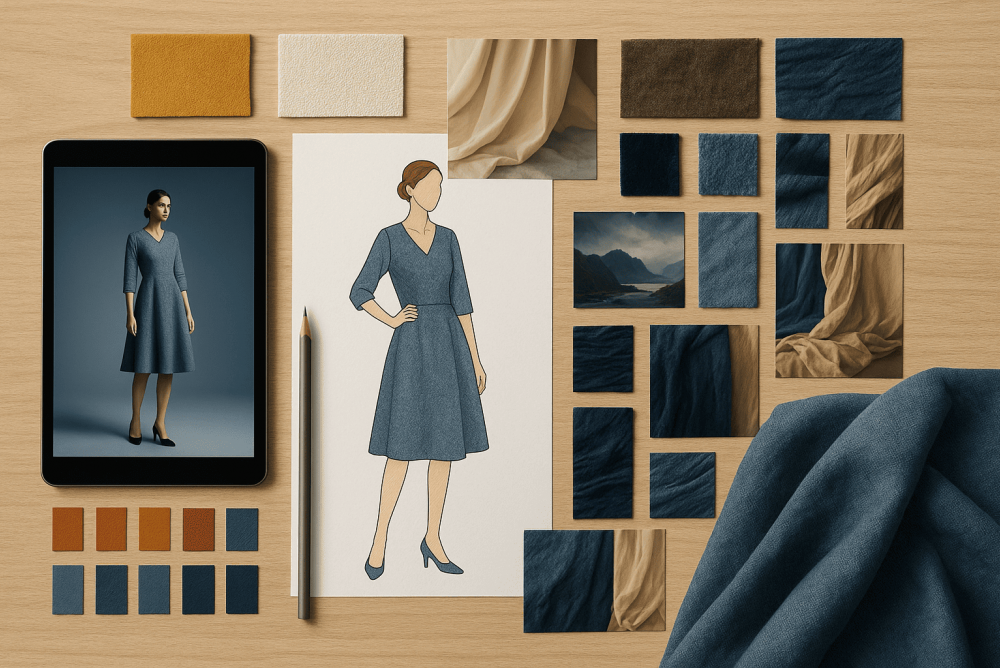
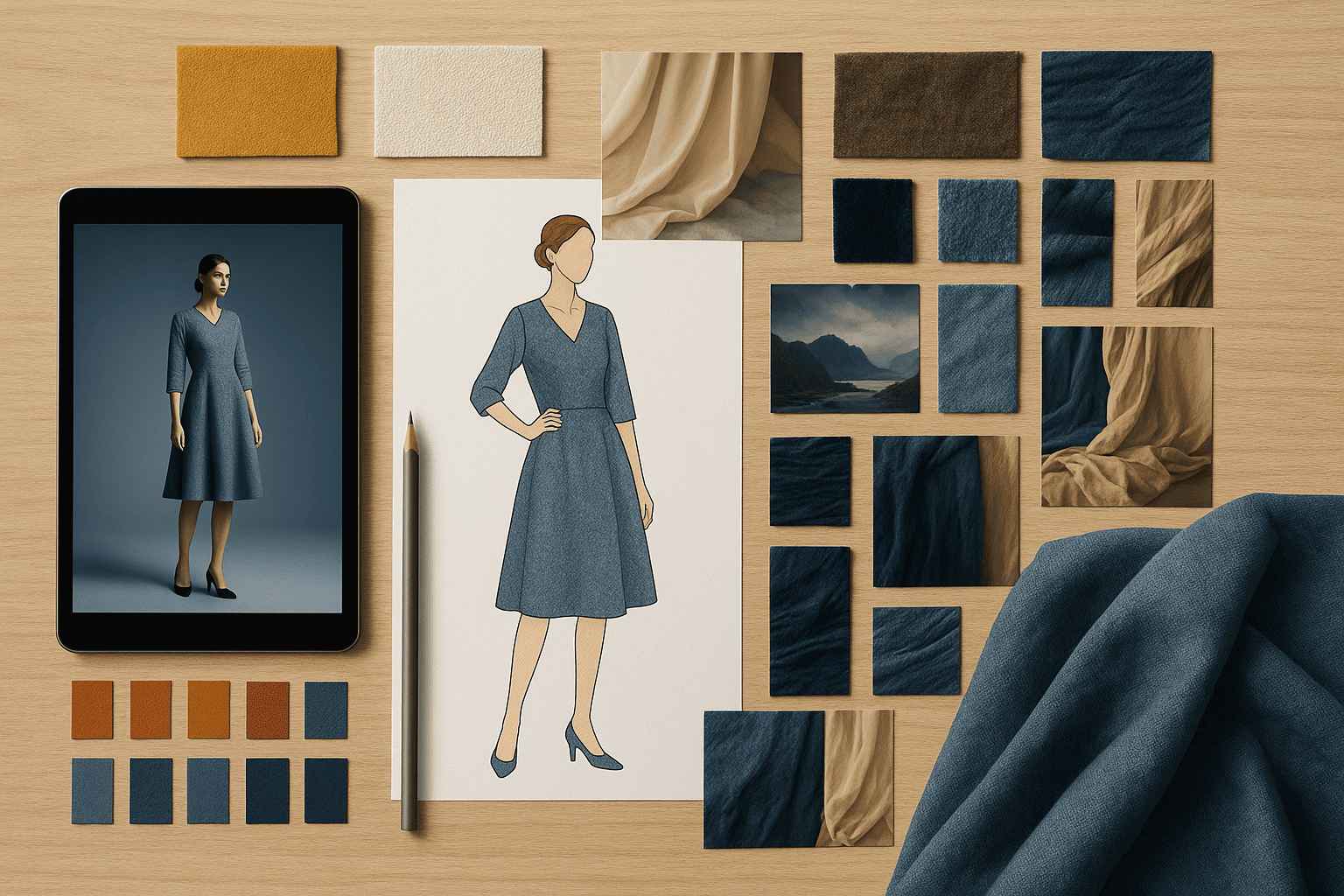
The textile industry is undergoing a quiet revolution. For centuries, designers relied solely on physical samples and personal flair to showcase their work. Today, artificial intelligence (AI) is offering a new layer of creative potential—one that is reshaping not just how fabrics are produced, but also how they are presented and perceived.
This change didn’t happen overnight. It evolved alongside advancements in machine learning, computer vision, and generative design tools. Now, we’re seeing AI transition from backend manufacturing roles to the front stage—enhancing design storytelling, automating presentations, and making textile portfolios more interactive and engaging than ever before.
According to a 2024 McKinsey report, over 38% of fashion and textile companies have begun integrating AI into their design and marketing workflows. AI isn’t replacing creativity; it’s amplifying it. With the help of AI, designers can visualize fabrics on realistic 3D models, automatically generate color-matching presentations, and even simulate fabric texture movement in motion graphics—without ever cutting a swatch.
These innovations offer more than visual polish. They improve communication between textile creators and potential clients, reduce material waste, and shorten feedback cycles. More importantly, they empower individual designers and small firms to compete with global brands by leveling the storytelling playing field.
Understanding the Traditional Textile Project Lifecycle
To understand the impact of AI in the textile space, we must first explore the traditional textile project lifecycle. From the initial concept sketch to the final pitch to clients or buyers, the process is often lengthy, labor-intensive, and full of manual iterations. For many designers, this is where time, talent, and resources are stretched thin.
1. Ideation and Conceptualization
Every textile project begins with an idea. Designers draw inspiration from nature, history, culture, or market trends. Mood boards are created manually using fabric scraps, color swatches, magazine cutouts, and pencil sketches. Although deeply personal and artistic, this stage often lacks scalability and speed.
In many cases, ideation takes weeks. Designers may sketch dozens of concepts before finding one that resonates. They must also ensure the concept aligns with market demands, seasonal palettes, and customer expectations—without immediate access to predictive insights.
2. Material Sourcing and Sampling
Once the concept is refined, designers source materials from suppliers. This step often involves international communication, shipping physical samples, and delays in procurement. Sampling is expensive and generates material waste, especially when multiple rounds of revisions are required.
Traditionally, swatches are evaluated by feel, appearance under different lighting conditions, and response to stress or drape. These assessments, while essential, cannot be digitized easily without the help of modern tools.
3. Pattern Making and Prototyping
Pattern making is a critical yet highly manual process. Designers or technical staff draft patterns, then cut fabrics and sew samples for physical evaluation. A single prototype can take days or even weeks, especially for intricate designs or new textile weaves.
Mistakes at this stage are costly—not just in terms of material, but time lost. Often, multiple prototypes are needed before reaching the desired outcome. These are then photographed for use in presentations, catalogs, or portfolios.
4. Presentation and Storytelling
Perhaps the most overlooked yet crucial step is how the project is presented. Designers must pitch their fabric or garment concept to brands, clients, or retailers. This typically involves static photography, sample books, physical mood boards, or slideshow presentations.
Unfortunately, traditional storytelling methods often fail to fully capture the texture, movement, or intended use of the fabric. A buyer may not understand the full vision without touching the material or seeing it in action—creating a barrier between creator and client.
5. Feedback and Iteration
Even after a pitch, feedback from stakeholders can trigger significant revisions. This means going back to the pattern, sourcing new materials, and repeating earlier steps. Without digital tools, these loops are slow and hard to manage efficiently, particularly for smaller studios or freelance designers.
According to a 2023 report by The Business of Fashion, the average product development cycle in textiles can stretch up to 6 months—much of it due to traditional manual processes and disconnected workflows.
The Role of Visual Storytelling in Textile Innovation
In the textile world, innovation alone is not enough. Even the most technically advanced or aesthetically stunning fabric can be overlooked without compelling storytelling. This is where visual storytelling becomes a cornerstone of modern textile presentation. It connects the designer's vision with the viewer's imagination—and increasingly, it determines whether a project succeeds in the market.
1. Storytelling Turns Fabric into Emotion
Textiles are tactile by nature. You can't always feel them through a screen, but you can evoke their texture through visuals. High-quality imagery, mood boards, and short videos help tell the story behind a fabric—where the inspiration came from, how it should feel, and what it might become.
Buyers want more than a swatch. They want to know the fabric’s potential. For example, is it best for outerwear or upholstery? Does it carry cultural or historical significance? Is it eco-conscious? These narratives elevate the textile beyond its technical properties and position it as part of a larger vision.
2. Traditional Storytelling Methods Are Limited
Before AI tools entered the scene, most designers relied on photography, fabric sample books, or PDF presentations. These formats were flat, static, and heavily dependent on access to professional studios or photographers. They often failed to convey motion, drape, or environmental interaction—key aspects of how textiles function in real life.
Moreover, these presentations were time-consuming and expensive. Smaller designers, especially those working independently or within limited budgets, struggled to compete visually with larger brands that had access to better resources.
3. Visuals Drive Perception—and Value
Numerous studies confirm the power of visual content. According to a 2023 report from Adobe, visuals increase user engagement by over 80% across digital platforms. In e-commerce settings, textile products accompanied by interactive or high-resolution visuals enjoy higher conversion rates.
This is especially important in B2B textile sales, where decisions are made quickly and based largely on visual first impressions. An investor or buyer may only spend 20–30 seconds looking at a presentation. Poor storytelling leads to missed opportunities.
4. Innovation Needs Communication
Textile innovation is accelerating, with developments in smart fabrics, sustainable fibers, and new weaving techniques. However, innovation is irrelevant unless clearly communicated. Designers must show how a new material performs, adapts, or solves a particular problem.
This is where visual storytelling shines. A high-speed video showing the stretch recovery of a new fabric, or a dynamic animation illustrating breathability layers, communicates benefits far more effectively than text or technical jargon.
5. Storytelling as a Competitive Differentiator
In saturated markets, storytelling helps designers stand out. It’s not just about “what” you made, but “why” and “how” you made it. AI-enhanced storytelling tools are now helping designers create branded narratives that are immersive, emotionally engaging, and tailored to their ideal audiences.
By weaving story into every thread of the design process, creatives can transform fabrics into experiences. This shift is especially relevant as buyers, consumers, and investors increasingly look for brands that align with values, vision, and identity.
How AI Enhances Textile Design Presentation
Artificial Intelligence is not replacing textile designers—it’s equipping them with tools to communicate better, faster, and more creatively. One of the most impactful ways AI is transforming the industry is through enhanced design presentation. By augmenting how fabrics are visualized and shared, AI helps textile creators tell richer, more convincing stories.
1. AI-Powered Fabric Visualization
One of the most immediate applications of AI in presentation is fabric simulation. Traditional photography requires physical samples, models, studio space, and lighting setups. But AI tools like Clo3D, Adobe Firefly, and Style3D simulate how a fabric would drape, wrinkle, and move on different body types or product forms—all without a physical prototype.
Designers can upload fabric patterns and apply them to 3D avatars or furniture mockups. AI algorithms simulate how the fabric behaves in real-time environments, accounting for properties like elasticity, weight, and stiffness. This gives clients a clear, dynamic understanding of how the final product might look and feel.
In 2024, Style3D reported that its users reduced sampling costs by up to 60% and shortened project timelines by 35%, thanks to real-time virtual visualization.
2. Smart Presentation Generation
Creating client-facing presentations used to take hours or even days. Now, AI can automatically generate branded pitch decks or visual boards using input data like design themes, keywords, or color palettes.
Tools like Canva AI, Beautiful.ai, and Visme integrate AI layout suggestions, data visualizations, and even image stylization to create sleek, professional-grade presentations. Designers can focus on creativity while the software handles structure and consistency.
For example, a user can input the phrase “eco-friendly cotton blend, spring/summer theme,” and the AI assembles a slide deck with matching colors, model mockups, environmental backgrounds, and bullet points explaining the fabric’s benefits.
3. Personalized Experiences for Clients
AI also enables personalization at scale. Through user behavior tracking and preference modeling, designers can tailor how their fabrics are presented to different audiences.
A pitch deck for a luxury fashion house might emphasize fabric sophistication and exclusivity, while a pitch to a techwear startup would highlight breathability, technical durability, or modular design elements. AI can adjust visuals, layout, and even tone to better fit the target audience.
This kind of smart adaptation was nearly impossible before. Now, it ensures every presentation feels bespoke, increasing engagement and conversion rates.
4. Enhancing Interactivity Through Augmented Reality (AR)
AI is the backbone behind many AR tools now used in textile showcases. Companies like Vectary and Sketchfab use machine learning to let clients place virtual textiles in real environments. A buyer can view how a fabric looks as a curtain in their own room or as an apparel sample on a customizable mannequin.
This real-time interactivity bridges the gap between imagination and execution. Buyers make more informed decisions. Designers need fewer physical samples. Everyone saves time and resources.
According to Accenture’s 2023 “Digital Textile Futures” report, brands using AR and AI-powered product demos saw a 47% increase in buyer engagement during early-stage presentations.
5. AI Voiceover and Video Editing for Narrated Pitch Decks
Another AI-driven advantage: narrated videos. Tools like Pictory, Synthesia, and Descript allow designers to turn static content into short, engaging narrated videos. The designer can script a pitch, and the AI automatically generates subtitles, visual transitions, and voiceovers in multiple languages.
This transforms the pitch from a passive document to an active experience. It works especially well for overseas buyers, multilingual stakeholders, or fast-paced startup environments where time is limited.
AI-Driven Prototyping and Fabric Simulation
Prototype development has always been one of the most resource-intensive phases in textile design. Traditionally, it involved multiple rounds of sampling, manual pattern adjustments, and repeated fabric tests—often under tight deadlines and budget constraints. But with AI-driven tools now entering this stage, designers are dramatically cutting costs and accelerating time-to-market, all while improving the final quality of their work.
1. Digital Twins: Simulating Reality with Uncanny Accuracy
The foundation of AI-enhanced prototyping lies in digital twins—virtual models that replicate the properties of real-world fabrics. These twins are built using AI algorithms that have learned how specific textiles react to stretch, light, pressure, and motion. When designers input material parameters—like cotton with 5% spandex blend—the software creates a digital representation that mirrors its real behavior.
One of the pioneers in this field is Browzwear, whose VStitcher software allows for hyper-realistic garment simulation. Brands like Adidas and PVH Corp. now use such platforms to test fit, movement, and drape without sewing a single physical sample.
By 2023, over 58% of mid- to large-scale fashion manufacturers had adopted some form of digital sampling to streamline prototyping, according to a survey by the Council of Fashion Designers of America (CFDA).
2. Real-Time Fabric Behavior Modeling
Not all fabrics behave alike. Some stretch, others wrinkle, and some hold their shape rigidly. Capturing these nuances is essential in textile development.
AI models trained on thousands of textile tests can now accurately predict fabric behavior under various conditions. For example, using deep learning, a designer can simulate how a lightweight wool reacts to wind, or how a performance knit responds to tension on the body.
This level of detail eliminates guesswork. It also allows teams to make more informed choices during material selection, reducing waste and improving sustainability metrics—an increasingly important factor for global buyers.
3. Pattern Generation and Alteration with AI Assistance
Beyond fabric simulation, AI also supports rapid pattern creation. Tools like TUKA3D and Adobe’s generative design functions allow users to input a desired silhouette or performance goal. The AI then generates multiple pattern options that can be immediately applied to virtual fabric samples.
Need to convert a summer dress into a winter-ready outfit? The system adjusts the pattern for thicker fabric, longer hems, and altered seam placement based on comfort and aesthetics. What once took days now takes minutes.
This is especially useful for independent designers who lack full pattern-making departments. With AI, they can achieve expert-level accuracy while retaining creative control.
4. Fit Testing Across Diverse Body Types
Another challenge in prototyping is fit testing. Traditionally, garments are made in one size and adjusted manually through fittings. This approach often overlooks diverse body types and can result in poor fit for end users.
AI simulation platforms now allow garments to be virtually tested on 3D avatars representing a wide range of body shapes and movements. Designers can preview where stress points occur or where extra fabric might bunch—all before manufacturing begins.
This technology supports inclusivity and improves customer satisfaction, especially in direct-to-consumer models. Brands using AI fit testing report up to 32% reduction in returns due to better initial fit, according to 2024 data from McKinsey’s Apparel Automation Index.
5. Shorter Prototyping Cycles, Faster Launches
Time-to-market is everything in a fast-moving textile economy. With AI-driven simulation, prototyping cycles that used to take 6–8 weeks can now be completed in under 10 days. This speed empowers designers to respond to trends in real time, test bolder ideas, and iterate rapidly based on stakeholder feedback.
It also means fewer physical samples shipped across borders—a major environmental benefit. By replacing 3D samples with digital twins, companies reduce carbon emissions and material waste, aligning their operations with sustainability goals.
Automating Creative Portfolios: A New Era for Textile Designers
A great textile project deserves an equally compelling portfolio. Yet for many designers—especially freelancers and small studios—creating a polished portfolio is a daunting task. The process often involves collecting fabric photos, writing descriptions, formatting layouts, and compiling everything into an organized digital or physical presentation. This is where AI is bringing profound change, automating what was once time-consuming and helping creatives present their work with clarity, consistency, and emotional appeal.
1. The Traditional Portfolio Struggles
Before AI, most designers built portfolios manually using tools like InDesign, PowerPoint, or web builders. These platforms offered flexibility but required a high level of design skill and significant time investment. As a result, many portfolios were inconsistent, visually outdated, or lacked storytelling depth.
Inconsistent formatting, misaligned typography, and low-quality images could ruin an otherwise brilliant textile collection. Worse, the burden of updating portfolios often meant that recent projects were omitted or poorly documented.
2. AI Portfolio Generators: Fast, Tailored, and Visually Cohesive
AI-based tools like Wix ADI, Format Flow, and Adobe Express now make portfolio creation nearly effortless. These systems analyze your uploaded content—images, design descriptions, color palettes—and automatically generate layouts that are visually appealing and brand-consistent.
For example, Wix’s AI engine can create a custom portfolio website in minutes, complete with animations, font matching, and responsive layouts. Designers can adjust the tone from “editorial” to “corporate” or “artistic” with a click, giving full control over how their work is perceived.
A 2023 survey by Behance found that users of automated portfolio tools reported a 40% increase in client inquiries compared to manually built portfolios. This isn’t just about aesthetics—it’s about credibility.
3. Dynamic Organization by Project, Theme, or Material
Modern AI-driven platforms offer intelligent content tagging. Designers can organize their portfolios not just by date or project, but by textile type, color theme, sustainability rating, or commercial success.
Imagine a buyer looking for “vegan leather alternatives for spring fashion.” With an AI-organized portfolio, designers can instantly generate a filtered gallery that presents only relevant work. This improves navigation and creates a tailored experience for every viewer.
These dynamic filtering systems are inspired by e-commerce UX design and are increasingly adopted in B2B textile marketplaces.
4. AI-Enhanced Copywriting and Storytelling
Textile designers are often visual thinkers, not copywriters. Yet portfolios need descriptions that contextualize each project—what inspired it, how it was developed, and why it matters.
AI writing assistants like Jasper, GrammarlyGO, and Notion AI can draft professional, concise, and emotionally resonant content. A simple prompt like “Describe this organic denim collection inspired by coastal erosion” can generate a compelling paragraph that sells the vision as well as the fabric.
This eliminates writer’s block and ensures consistency in tone and voice throughout the portfolio. It also boosts the designer’s ability to communicate clearly with international audiences.
5. Integrated Analytics: Know What Resonates
Some AI-driven platforms now include analytics dashboards. Designers can see how long a potential client viewed a specific fabric line, which projects had the most engagement, and where users dropped off.
This feedback is invaluable. It allows designers to refine their portfolios, focus on high-performing work, and improve pitch strategies based on real data rather than guesswork.
In 2024, Format.com introduced real-time heat maps for portfolio viewing behavior, helping designers understand which layouts and narratives had the strongest impact.
6. Accessible Across Devices and Mediums
AI-powered portfolios are fully responsive, ensuring that textile work looks stunning on phones, tablets, and desktop screens alike. This cross-platform consistency is crucial in today’s fast-paced fashion and design industries, where buyers might first view a project on mobile during a commute or backstage at a trade show.
Additionally, portfolios can be exported into formats suited for PDF download, live web sharing, or even interactive presentations—broadening how and where designers can pitch their work.
Case Studies – AI in Action Across the Textile Industry
Theories are powerful, but results speak louder. To understand how AI is transforming textile presentation and storytelling, we must look at real-world examples. Across the globe, startups, designers, and multinational brands are adopting AI to rethink how fabrics are showcased—from concept to pitch. These case studies illustrate how artificial intelligence isn’t just a technical novelty but a practical game-changer.
1. H&M Group – Leveraging AI for Sustainability and Style
H&M, one of the world’s largest fashion retailers, has integrated AI across multiple stages of its design and presentation processes. In 2023, the company piloted an AI-based fabric simulation tool internally to model how new eco-friendly materials would behave across their various clothing lines.
Rather than producing physical samples of each new textile innovation, H&M's design teams used digital twins and AI-fueled motion rendering. These virtual garments were then used in internal stakeholder presentations and pitch decks for eco-collections.
The results were impressive:
Prototyping time was cut by 40%.
Over 500 kg of textile waste was avoided during the pre-production phase.
Their sustainability pitch decks, enhanced with AI-generated visuals, helped secure supplier buy-in for large-scale sustainable materials sourcing.
2. The Fabricant – A Digital-Only Fashion House
The Fabricant is a Netherlands-based digital fashion house that creates garments that only exist virtually. The brand uses AI and 3D rendering to produce highly realistic textile visuals, eliminating physical sampling entirely.
In 2022, The Fabricant partnered with Adidas on a virtual collection. AI-driven texture engines replicated the movement, sheen, and layering of technical sportswear fabrics. These digital garments were used in fashion campaigns, metaverse events, and pitch decks without ever being physically manufactured.
Key outcomes:
Project completed in under 3 months (traditional timelines often exceed 6 months).
Costs reduced by an estimated 70%.
Digital presentation resulted in over 1 million impressions across fashion tech platforms and social media.
3. Stoll (A Brand of Karl Mayer Group) – AI for Smart Knitwear Prototyping
Stoll, a well-known player in the knitting technology space, uses AI to create smarter knitwear development workflows. Their AutoCreate software incorporates machine learning to auto-generate stitch simulations based on simple user inputs.
Designers can enter the type of yarn, end use, and desired flexibility. AI then simulates the entire knit structure and produces 3D renderings that mimic the stretch and flow of real fabric. These are used to present collections to clients digitally.
Results from internal data:
Reduced prototyping time from 15 days to 4.
Boosted client presentation engagement by 65%.
Minimized material consumption in R&D by over 30%.
4. Textile Student Projects – AI in Academia
AI isn’t just for the big players. Fashion schools like the London College of Fashion and Parsons School of Design have integrated AI-driven tools into their curriculum. Students now use Clo3D, Runway ML, and Midjourney to present textile concepts.
One student at London College of Fashion created an entire collection of AI-generated jacquard patterns based on climate data. Her pitch presentation included motion simulations of the fabric used in coats designed for urban cyclists, complete with AI-generated cityscapes and movement demos.
Her project won a finalist spot in the 2024 Redress Design Award, largely because of the compelling storytelling made possible through AI tools.
5. Small Studio in Vietnam – Democratizing Design Reach
In 2023, a two-person textile studio based in Ho Chi Minh City used AI tools like ChatGPT for writing project descriptions, and Canva’s AI features for portfolio design. They uploaded their designs to a Behance-powered portfolio site that used generative layouts.
Their presentation of hand-dyed, upcycled fabrics—supported by professional-grade AI visuals and brand narratives—caught the attention of a boutique retailer in Berlin. The studio secured a five-figure export deal, without ever flying to Europe or presenting samples in person.
The co-founder commented, “AI gave us a level playing field. We now look like a global brand, not just a local workshop.”
Challenges, Limitations, and Ethical Considerations
While AI offers exciting opportunities for textile innovation and presentation, it's not without its complications. Designers and brands using AI tools must also navigate technical barriers, creative limitations, and emerging ethical questions. As we embrace these new tools, we must also ask: at what cost does this innovation come?
1. Over-Reliance on AI Can Dilute Creative Voice
One of the biggest risks is creative homogenization. AI design tools often generate content based on trained models and popular aesthetic trends. If designers lean too heavily on these suggestions, portfolios and presentations may begin to look eerily similar.
This is especially true with AI art generators and auto-layout systems. While fast, they can strip away the unique nuances that define a designer’s signature style.
The solution isn’t to avoid AI, but to treat it as a co-creator, not a replacement. Designers must retain authorship, guiding the AI rather than following its lead blindly.
2. Data Bias and Cultural Misrepresentation
AI is only as good as the data it’s trained on. Unfortunately, many machine learning models are built using datasets that reflect Western beauty standards, dominant textile traditions, and commercial trends.
For designers from underrepresented communities, this presents a risk of cultural flattening. If AI fails to understand traditional dyeing techniques, indigenous symbolism, or niche markets, it can generate inappropriate or inaccurate visualizations.
For example, an AI-generated textile based on African wax print patterns may unintentionally strip away meaning or use culturally significant motifs out of context.
Designers must ensure that AI tools are used with cultural sensitivity. Whenever possible, they should feed in custom datasets or supplement with human storytelling to maintain authenticity.
3. Technical Limitations and Access Gaps
Not all designers have access to high-powered AI platforms. Many advanced tools—like 3D simulation suites or AR-enhanced prototyping—require steep learning curves, expensive licenses, or powerful hardware.
This creates an access divide, particularly between designers in the Global North and those in emerging markets. While AI has the potential to democratize design, it could also deepen existing inequalities if access is not expanded.
Efforts are underway to bridge this gap. Platforms like Clo3D offer student licenses, and open-source initiatives like Blender and RunwayML continue to improve accessibility.
Still, until AI tools are as ubiquitous as sketchpads, not every creative voice will be equally amplified.
4. Intellectual Property and Originality Concerns
AI models trained on public databases may inadvertently reproduce or remix copyrighted designs. This creates potential legal risks. If a generative tool replicates a famous pattern or colorway, even unknowingly, the designer using it could face infringement claims.
In the textile industry, where visual differentiation is crucial, originality matters. Designers must ensure that their AI outputs are either sufficiently transformed or verified through copyright-safe systems.
Some designers are now adding watermarks, blockchain tagging, or timestamped archives to prove ownership of AI-generated concepts.
5. Ethical Use of AI Avatars and Virtual Models
AI-generated models, often used in textile presentations, bring up ethical concerns around realism and representation. If the model is digitally perfect but doesn’t reflect the intended audience’s body type, age, or demographic, it creates a false promise.
There’s also the issue of consent. Many AI avatars are built using datasets scraped from the web. Without permission from real-life individuals, this raises red flags about privacy and exploitation.
To remain ethically responsible, designers should use transparent AI modeling tools that respect privacy and representation. Platforms like ZMO.ai and Lalaland.ai now offer customizable, ethically sourced avatars to ensure responsible use.
6. Sustainability Trade-Offs
AI helps reduce fabric waste through digital sampling. But the AI industry itself has a carbon footprint. Training a single large language model or generative design algorithm can consume as much energy as several households use in a year.
As textile brands tout sustainability, they must also examine whether their AI tools align with their green promises. Low-impact computing, renewable energy for rendering, and selective use of generative tools can mitigate this concern.



-500x500.jpg "Summer Boys' Leisure Print Set Colorful Sports Suit")
-500x500.jpg "Summer Boys' Tank Top Shorts Sports Set")
-500x500.jpg "Summer hollow-knit short-sleeved jumpsuit")
-500x500.jpg "Summer cute cartoon short sleeved climbing suit")
-500x500.jpg "Summer Square Neck Lace Fly Sleeves Baby Rompers")